


News Categories

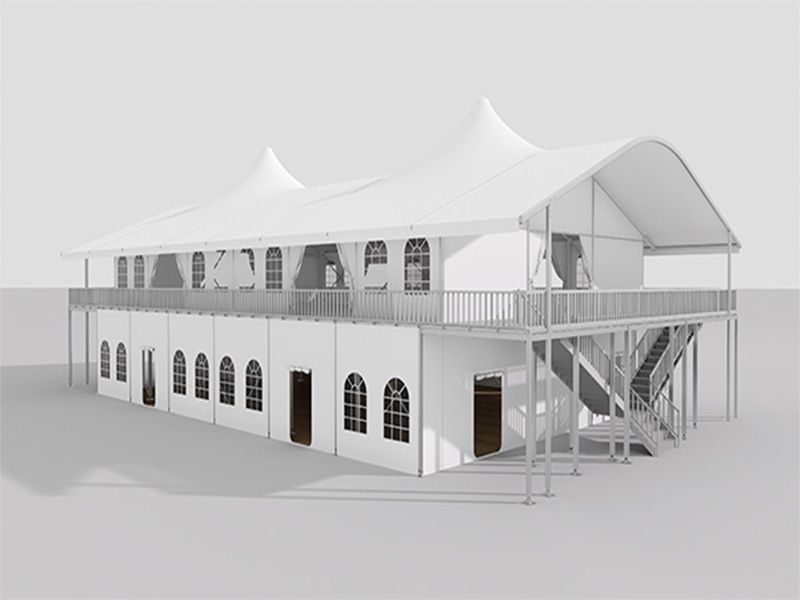
Quick Answer: An aluminum-frame Hajj tent for Saudi Arabia should specify three things in writing: a 6061-T6 alloy frame supported by mill certificates, an 850 g/m² PVC membrane with DIN 4102 B1 certification, and structural calculations based on the project's wind zone. HUANYU TENT states that its structures are engineered for wind loads of up to 100 km/h.
Aluminum frames may cost approximately 10–20% more than equivalent galvanized steel structures at FOB, but their lower material density can reduce transportation weight. They also offer corrosion resistance and are designed for dismantling, flat packing and seasonal reuse. This guide covers alloy specifications, structural dimensions, freight planning, pricing and the checks buyers should make before ordering.
Mina and Arafat tent projects are often planned as multi-season assets rather than one-season shelters. Three site conditions make frame material an important purchasing decision.
Equipment arriving through Jeddah Islamic Port is exposed to the humid, salt-laden environment of the Red Sea coast. Galvanized steel may experience coating deterioration and corrosion over time if protection is damaged. Properly specified and anodized 6061-T6 aluminum offers strong corrosion resistance and generally does not require the same routine recoating as galvanized steel.
Saudi Arabia's desert climate can involve substantial daily temperature changes. Aluminum structures need appropriately designed connections to accommodate thermal expansion. Slotted bolt connections can help manage movement, while steel structures also require suitable joint and fatigue design.
Every kilogram of frame material shipped from China contributes to transportation costs. Aluminum has a much lower density than steel, which can reduce the weight of structural components. Combined with modular design and flat packing, this can improve container utilization and seasonal storage efficiency.
| Criterion | Aluminum 6061-T6 Frame | Galvanized Steel Frame | What It Means at Mina |
|---|---|---|---|
| Material Density | 2.70 g/cm³ | 7.85 g/cm³ | Aluminum has approximately 65% lower material density, potentially reducing frame shipping weight depending on structural design. |
| Corrosion | Anodized surface; strong corrosion resistance | Galvanized protection can wear or become damaged | Important for multi-season reuse in coastal environments near Jeddah. |
| Typical Service Life | 15–20 seasons (frame, as stated for the specified product) | 8–12 seasons before potential recoating or replacement | Actual service life depends on maintenance, environment and usage conditions. |
| Handling | Potentially easier manual handling; labeled components | Crane or lifting equipment may be needed for large components | Can influence installation and dismantling arrangements on constrained plots. |
| Modular Dismantling & Repacking | Flat-packed components with identification labels | May be bulkier, depending on fabrication and design | Useful for seasonal storage and reinstallation. |
| Indicative FOB Price | 10–20% higher than a comparable steel structure | Baseline | The initial price gap should be evaluated alongside freight and expected service life. |
Quote-Ready Fact: Aluminum has approximately 35% of the density of steel. An equivalent-volume aluminum component therefore weighs roughly one-third as much as its steel counterpart. Actual frame weight depends on profile dimensions, wall thickness and structural engineering. For a 5,000 m² camp, the difference can have a meaningful impact on container planning.
6061-T6 is a widely used aluminum alloy and temper for engineered structural applications. It contains magnesium and silicon and is solution heat-treated and artificially aged. Depending on the product form and applicable specification, its yield strength is commonly in the approximate 240–290 MPa range.
Its strength-to-weight characteristics make it suitable for extruded structural profiles. Multi-chamber profile sections can provide stiffness for large-span tent structures without interior support columns, provided that the complete structure is properly engineered.
One important sourcing risk is alloy substitution. The word "aluminum" alone is not a sufficient material specification. Some quotations may use unspecified commercial grades or recycled alloys that look similar but do not meet the agreed mechanical properties.
Protect your purchase by requesting documents and checking that they match the actual order.
| Verification Item | What to Require | Red Flag |
|---|---|---|
| Mill Certificate | EN 573-3 / ASTM B221 documentation matched to the supplied batch and order. | "Certificate available on request" only after the deposit is paid. |
| Temper Proof | T6 temper clearly stated on the material certificate. | T5 or no temper designation listed. |
| Anodizing Specification | Written anodic layer thickness requirement, such as ≥10 µm where specified. | Only a general statement such as "powder-coated white". |
| Profile Section Drawing | Dimensioned 204×120×4 mm four-channel main profile, as specified for the referenced product. | No profile section drawing or dimensions provided. |
| Structural Calculation | Stamped structural calculation package based on the project's wind zone. | Wind resistance claims without supporting calculations. |
HUANYU TENT states that its Hajj aluminum tents use a 5 m bay module and a 204×120×4 mm four-channel main profile. The following dimensions can be used as a preliminary reference when preparing a tender or discussing a project layout.
| Span Width | Eave Height | Ridge Height | Bay Distance | Main Profile |
|---|---|---|---|---|
| 10 m | 3.88 m | 5.53 m | 5 m | 204×120×4 mm (4-channel) |
| 12 m | 3.88 m | 5.83 m | 5 m | 204×120×4 mm (4-channel) |
| 15 m | 3.88 m | 6.30 m | 5 m | 204×120×4 mm (4-channel) |
| 16 m | 4.00 m | 6.50 m | 5 m | 204×120×4 mm (4-channel) |
| 18 m | 3.88 m | 6.90 m | 5 m | 204×120×4 mm (4-channel) |
| 20 m | 3.88 m | 7.10 m | 5 m | 204×120×4 mm (4-channel) |
| 20 m (High) | 6.00 m | 9.22 m | 5 m | 204×120×4 mm (4-channel) |
| 21 m | 3.88 m | 7.25 m | 5 m | 204×120×4 mm (4-channel) |
| 25 m | 3.88 m | 7.88 m | 5 m | 204×120×4 mm (4-channel) |
Custom spans from 3 m to 60 m are available according to the stated production range. This allows the tent layout to be considered against the exact plot allocated in Mina or Arafat rather than forcing the site plan to fit a standard catalogue size.
The stated configuration uses thickened 850 g/m² PVC membrane with DIN 4102 B1 flame-retardant classification, waterproofing, UV stabilization and anti-aging properties. Optional insulated liners may be considered where reducing cooling loads is a project priority.
Clear-span interiors provide open floor space for high-density sleeping layouts, service areas and congregation use without internal support columns obstructing the planned arrangement.
HUANYU TENT states that its structures are engineered for wind loads of up to 100 km/h. A project-specific structural calculation package should be requested for review by the buyer's engineering team and relevant local authorities.
Available sidewall options include PVC, glass and transparent ABS hard walls. Interior configurations can be discussed according to the project's intended use and religious facility requirements.
Procurement tenders count tents, but shipping containers are filled according to cargo weight and volume. Aluminum changes the freight calculation in two ways: lighter structural components can reduce shipping weight, while modular labeling and flat packing can improve packing efficiency.
Before signing an aluminum tent purchase order, request the packed volume per unit and ask the manufacturer to prepare a container loading plan based on the actual shipment dimensions.
Using the planning assumptions in this example, a 5,000-pilgrim camp at approximately 1.42 m² per person requires around 7,100 m² of tent footprint.
This could correspond to roughly 35–40 units with a 20 m span and 10 bays each, before adding space for circulation and supporting facilities.
Allowing an additional 25–35% for circulation, ablution facilities, kitchens, medical areas and fire lanes increases the overall site planning requirement.
At aluminum-frame packing densities, this can become a mid-double-digit container program. Heavier frame configurations may require more shipping capacity. The final container count should be calculated from actual packed dimensions, cargo weights and loading arrangements.
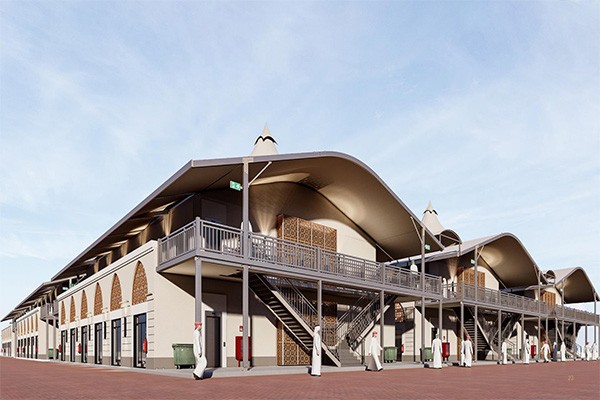
The following price ranges are indicative budgeting references for different aluminum tent configurations. Actual quotations depend on project dimensions, material specifications, structural engineering, membrane selection and order quantity.
| Configuration | Indicative FOB Price | Typical Application / Notes |
|---|---|---|
| Open-Sided Aluminum Shade Structure, 15–25 m Span | $35–55 / m² | Arafat day camps and circulation areas. |
| Aluminum Frame + Insulated PVC Pilgrimage Tent, 5 m Bay Module | $45–75 / m² | Mina-style accommodation and AC-ready configurations. |
| Aluminum Frame + Hard Walls (Sandwich Panel / ABS / Glass) | $65–95 / m² | Clinics, kitchens and secure storage facilities. |
| Large-Span Clear-Span Aluminum Structure, 30 m+ | $70–110 / m² | Congregation halls and dining facilities. |
All prices are indicative FOB budgeting references for structure-only configurations. They are not binding quotations or guaranteed market prices.
LME aluminum price movements: Aluminum raw material prices can fluctuate. Check the quotation validity period and confirm the agreed pricing basis in writing before placing an order.
Unusually low quotations: If a price is significantly below the indicative range, investigate the alloy grade, material certificates, profile wall thickness, anodizing specifications and engineering scope before assuming the difference comes from manufacturing efficiency.
Weight and seasonal reuse are two important considerations. Aluminum has approximately one-third the density of steel, which can reduce structural shipping weight. Properly specified anodized 6061-T6 aluminum also offers strong corrosion resistance in coastal environments near Jeddah. HUANYU TENT states that its aluminum frames are designed for 15–20 seasons of dismantling and reuse, subject to appropriate maintenance and operating conditions.
6061-T6 is a suitable specification to consider for engineered aluminum tent frames. Request a batch-matched mill certificate referencing EN 573-3 or ASTM B221, with the T6 temper clearly stated. Also request the profile section drawing and stamped structural calculations. The word "aluminum" without supporting material documentation is not an adequate specification.
HUANYU TENT states an expected frame service life of 15–20 seasons for its specified aluminum structure. The 850 g/m² PVC membrane is stated to have an 8–12 year service life and can be replaced separately. Actual service life depends on exposure, maintenance, storage and usage. Modular components can be labeled, dismantled and stored between seasons.
HUANYU TENT states that its structures are engineered for wind loads of up to 100 km/h. Buyers should request the project-specific structural calculation package for their actual site conditions, including the relevant wind design criteria, before confirming the specification.
Indicative FOB pricing for insulated aluminum-frame pilgrimage tents is $45–75/m² for structure-only configurations. Hard-wall configurations are approximately $65–95/m². The final landed project cost may be higher after freight, duties, local handling and installation. The actual cost multiplier depends on the destination, shipment plan and project scope.
Yes. HUANYU TENT states that it can produce custom spans from 3 m to 60 m using a 5 m bay module. This allows the structure layout to be developed around the allocated plot dimensions rather than restricting the project to standard catalogue sizes. Final dimensions remain subject to structural engineering and site requirements.
Share your plot dimensions, expected pilgrim capacity and required fire standard with HUANYU TENT. Our team can help prepare a span recommendation, a packing list with volume per unit and a structural calculation sample, usually within 48 hours after receiving sufficient project information.
HUANYU TENT — Aluminum-frame pilgrimage structures manufactured in Changzhou, China, and supplied to international project markets including Saudi Arabia.
Request the span table, aluminum alloy certificates and a project quotation to start planning your Hajj tent procurement.
Request a Project QuotationHUANYU TENT manufactures aluminum-frame pilgrimage tents, Hajj tents, clear-span structures and customized temporary buildings for large-scale accommodation and event applications.


