


News Categories

A 27m × 42m prefabricated sports marquee has recently been completed, packed and shipped to Portugal for a long-term European partner. Designed as a multifunctional sports venue, the project demonstrates how a custom sports court tent can provide a flexible alternative to conventional sports buildings for padel, pickleball, basketball, badminton and other indoor or covered sports facilities.
The project was developed by Changzhou HY Tent & House Manufacturing Co., Ltd., a sports tent manufacturer with more than 15 years of factory experience, a 10,000㎡ factory area, 2,000+ project cases and 60+ patents and certifications. HY specializes in customized aluminum-frame tent solutions for sports clubs, commercial facilities, event organizers and other overseas projects.
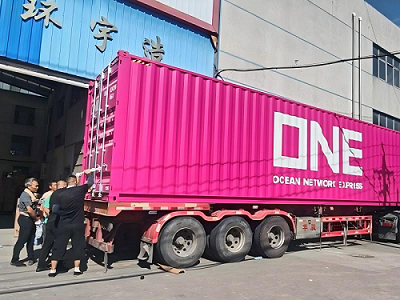
The Portugal project required a large-span prefabricated sports marquee that could provide a spacious, weather-protected environment while maintaining flexibility for future sports applications.
| Item | Project Details |
|---|---|
| Project Type | Prefabricated Sports Marquee |
| Project Size | 27m × 42m |
| Destination | Portugal |
| Application | Multifunctional Sports Venue |
| Potential Sports Uses | Padel, Pickleball, Basketball, Badminton and Training |
| Main Structure | 6061-T6 Extruded Aluminum Alloy |
| Roof Fabric | 850g/㎡ PVC-coated polyester |
| Sidewall Fabric | 650g/㎡ PVC-coated polyester |
| Structure | Modular, clear-span design |
| Customization | Dimensions, facade, logo and supporting equipment |
The final configuration can be adapted according to local site conditions, sports requirements, wind loads, foundation conditions and the intended use of the venue.
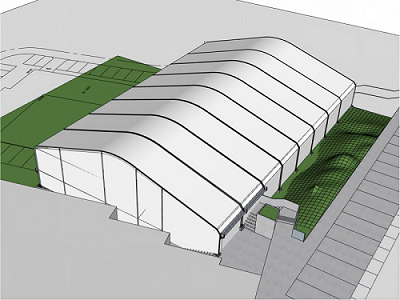
A prefabricated sports marquee is a modular structure that combines an aluminum frame with engineered PVC fabric to create a large, flexible covered space. Compared with conventional concrete sports buildings, this type of structure can be installed faster, relocated when necessary and customized according to the available site.
For sports clubs and commercial operators, the main advantages include:
Fast construction: HY states that many sports tent projects can be installed within 5–10 days.
Large clear-span space: The structure can be designed without interior columns, maximizing usable court space.
Flexible dimensions: Sports court tents can be customized in span, length and eave height.
Reusable structure: The modular aluminum frame can be dismantled, relocated and reused.
All-weather protection: PVC roofing provides waterproof, UV-resistant and flame-retardant performance.
Lower initial investment: HY states that sports arena tents can reduce costs by up to 60% compared with conventional concrete stadiums, depending on project configuration.
These characteristics make prefabricated sports marquees particularly relevant for sports clubs, training centers, temporary sports facilities and commercial sports venues.
Yes. A properly engineered sports court tent can be customized for padel and pickleball facilities.
HY's sports court tent solutions include dedicated configurations for padel courts and pickleball courts, with clear-span layouts designed to avoid internal columns interfering with court activities. The website lists a 10m single-court / 20m double-court configuration for pickleball applications, with customizable length and a maximum span of up to 60m for relevant structures.
For padel and pickleball projects, buyers should consider:
Court dimensions and required clearance.
Eave and roof height.
Natural lighting requirements.
Artificial lighting installation.
Ventilation and air-conditioning requirements.
Wind-load conditions at the project site.
Ground and foundation conditions.
Drainage requirements.
Sidewall transparency or opacity.
Future expansion requirements.
HY can also integrate optional lighting systems, ventilation equipment, surrounding nets, windproof curtains and air-conditioning interfaces into sports tent solutions.
Material selection directly affects the structural stability, durability and weather resistance of a sports marquee.
HY sports court tents use 6061-T6 hard-pressed extruded aluminum alloy for the main frame. The material combines high strength, relatively low weight and corrosion resistance, making it suitable for modular sports structures. The frame uses a multi-channel design and can be assembled, dismantled and reused.
The roof covering uses 850g/㎡ PVC-coated polyester fabric. Depending on the configuration, the material can provide waterproof, UV-resistant, tear-resistant and flame-retardant performance.
HY lists fire-retardant specifications including DIN4102 B1/M2 and NFPA701 for applicable sports tent configurations.
The standard sidewall material is 650g/㎡ PVC-coated polyester fabric, with translucent or transparent options available. Depending on the project, glass walls, hard steel walls or other wall configurations can also be considered.
Wind resistance should always be determined according to the actual project location, structure size, anchoring method and local engineering requirements.
HY's sports court tent specifications list wind-resistance ranges from 70km/h to 120km/h, with reinforced configurations available according to site requirements. Some listed sports hall configurations specify 100km/h standard wind resistance and 120km/h for reinforced versions.
The fixing solution can include:
Ground anchors
Expansion bolts
Weight plates
Concrete embedded parts
The appropriate fixing method depends on the existing ground conditions and project engineering requirements.
For a Portugal project, technical parameters should therefore be confirmed according to the specific site, local regulations and required structural calculations rather than relying on a generic wind-resistance figure.
A major advantage of a customized sports court tent is its adaptability to different installation environments.
HY lists applications on:
Grassland
Soil
Asphalt
Cement
Marble
Artificial turf
Padel court flooring
Pickleball court flooring
Different ground conditions require different anchoring or fixing solutions. Ground anchors, expansion bolts, weight plates and embedded concrete components can be selected according to the project.
For overseas projects, this assessment should be completed during the engineering design stage to reduce installation risks.
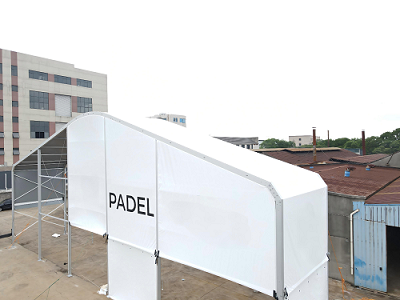
For the 27m × 42m Portugal project, the engineering process involved multiple rounds of communication with the client before production and shipment.
Requirement confirmation → Structural design → Technical drawing verification → Accessory confirmation → Partial factory trial assembly → Remote inspection → Component labeling → Packing → Shipment
During the technical stage, the team discussed factors including:
Site layout
Structural stability
Wind-resistance requirements
Fabric performance
Drainage
Facade appearance
Custom logo printing
Installation requirements
Partial factory assembly was then conducted to check key frame connections, fabric tension areas and drainage components.
Photos and videos were provided to the client for remote inspection before final packing.
This process is particularly important for overseas sports tent projects because it allows potential assembly or component issues to be identified before the equipment leaves the factory.
Unlike a small event tent, a large-span sports marquee contains multiple structural components, fabric sections, connectors and fixing systems.
Factory trial assembly helps verify:
Frame connection compatibility
Component fitting tolerance
Fabric dimensions
Fabric tension
Accessory matching
Drainage component installation
Assembly sequence
Packaging and labeling requirements
After approval, components can be labeled and packed according to installation requirements, helping the overseas installation team identify structural parts more efficiently.
For international buyers, this can reduce communication difficulties and installation risks at the project site.
Sports court tent dimensions should be determined by the sport, number of courts, required clearance, site conditions and future expansion plans.
HY provides multiple standard and customized configurations. For example, listed configurations include:
Tennis: approximately 15m half-court / 20m full-court span, with customizable length.
Football: approximately 30m–40m span, with standard lengths around 50m–60m and customized options.
Pickleball: approximately 10m single-court / 20m double-court span, with customized length.
Large-span structures: up to approximately 60m span for applicable configurations.
Eave heights can also be customized according to sports requirements, with higher configurations available for professional competition applications.
Therefore, buyers should not select a sports marquee based only on floor area. Court layout, vertical clearance, lighting, ventilation and structural loading should all be considered.
A custom sports marquee can be configured beyond the basic frame and fabric structure.
Depending on the project, optional systems may include:
Sports lighting
Ventilation equipment
Air-conditioning interfaces
Surrounding sports nets
Windproof curtains
Transparent or translucent sidewalls
Customized facade branding
Different anchoring systems
This allows the same basic sports marquee concept to be adapted for different commercial sports facilities and climates.
For buyers comparing a sports marquee with a conventional permanent sports building, the key difference is flexibility.
| Factor | Prefabricated Sports Marquee | Traditional Sports Building |
|---|---|---|
| Construction | Modular prefabrication | Conventional construction |
| Installation | Typically faster | Usually longer |
| Interior Space | Clear-span options | Depends on structural design |
| Relocation | Possible with modular systems | Generally difficult |
| Expansion | Flexible | More complex |
| Structure | Aluminum + membrane/PVC | Concrete/steel and other materials |
| Customization | Size, fabric, walls and accessories | Extensive but often construction-intensive |
| Sports Applications | Padel, pickleball, tennis, basketball, football, badminton and more | Broad |
| Initial Investment | Can be lower depending on design | Usually higher for full permanent buildings |
A sports marquee is not automatically the right solution for every project. Permanent sports buildings may be more appropriate when a project requires extensive permanent infrastructure or specific building-code requirements. The right choice depends on budget, land use, project duration, climate, local regulations and operational plans.
HY combines sports tent manufacturing, engineering customization and overseas project support.
According to the company's official website, HY has:
15+ years of factory experience
10,000㎡ factory area
2,000+ project cases
60+ patents and certifications
CE and SGS certifications
Structural drawings and installation documentation for projects
Customized dimensions, materials and configurations
Sports tent solutions for international customers
HY's sports tent portfolio includes A-frame, Arcum, Polygon and Curve structures, allowing the structure to be selected according to span, appearance, wind conditions, sports application and site requirements.
Are prefabricated sports marquees suitable for long-term use?
Yes. HY lists an expected service life of at least 15 years for the aluminum frame and approximately 5–8 years for the fabric under normal usage conditions, although actual service life depends on climate, maintenance, usage and environmental exposure.
Can a sports marquee be dismantled and reused?
Yes. The modular aluminum frame is designed for assembly and disassembly and can be reused or relocated for suitable projects.
Can the sports marquee be customized for Portugal or other European markets?
Yes. Dimensions, span, eave height, fabric, facade, fixing method and supporting equipment can be customized according to project requirements. However, structural design and certification requirements should be verified against the applicable local regulations before construction.
How quickly can a sports tent be installed?
HY states that its sports arena tents can be installed in approximately 5–10 days for applicable projects. Actual installation time depends on project size, ground preparation, weather, manpower and site conditions.
What documents can an overseas buyer receive?
HY states that it can provide structural drawings, packing lists, installation manuals, relevant certificates and customs declaration documents as part of its one-stop service.
The 27m × 42m Portugal project demonstrates how a prefabricated sports marquee can be customized for large-scale sports applications while combining modular construction, clear-span space, weather-resistant materials and flexible installation.
For sports clubs, developers and commercial operators planning padel courts, pickleball courts, tennis facilities, basketball courts, football training fields or multifunctional sports venues, the key is to select the structure based on the actual court layout, span, wind conditions, ground type, climate, local regulations and future operating requirements.
If you are planning a custom sports court tent project in Portugal, Europe or another international market, HY can develop a customized sports marquee solution based on your required dimensions, sports application, site conditions and technical specifications.


